Here’s why I became interested in nutrition. Before I dive into my personal experience, I want to explain why I am writing this. Sometimes it can feel difficult or daunting to open up about your struggles, so my hope is to share some of the challenges I experienced in order to connect with others who may be going through something similar.
Dietitians are not people to be afraid of. Our goal is not to tell you what to do, shame you, or force you to cut out every food you enjoy. The purpose of nutrition is to help improve your quality of life through healthy and sustainable habits. Your body gives you the ability to take on new challenges every single day from the smallest tasks, like walking to class, to the most physically demanding events, like a marathon, triathlon, or Ironman. The important thing to realize is that your body is incredible, and it deserves to be honored and properly fueled so that you can take on life feeling strong, energized, and fulfilled.
I grew up with four brothers. Yup, exactly. It was rough. Imagine being surrounded by boys your entire life. Thankfully I was blessed with the most beautiful sister in the world down the line. Here was the problem though, I was competitive, stubborn, and determined to keep up with my brothers at all costs. If I slowed down, I felt like I would fall behind. I had to prove myself during pickup football games, late-night manhunt, and every competition we could turn into a game.
All of my brothers were athletes, so there was never much time spent sitting around watching television. Instead, we were outside tackling each other on Thanksgiving Day in the backyard while the sun set through the trees and my mom yelled from the porch, “Come on, it’s time to say Grace!” Of course, none of us were stopping the game until someone got hurt or one of the boys ran inside complaining about a black eye or a football to the head. Ahhh, Thanksgiving. Isn’t that what every family does?
As chaotic as it sounds, those moments built something inside me. I became the little girl who could keep up. My brothers’ friends would say, “Holy sh**, she is fast,” while trying to catch me during games of manhunt. Little did they know, and honestly little did I know, that those moments were quietly building a fire inside me that would never fully burn out.
Soon enough, I started playing every sport imaginable. My mom put me in everything: dance, gymnastics, ballet, tap dancing , jazz you name it. I spent years trying to convince her not to take me to dance classes by pretending I had stomach aches, but somehow she never bought it. To be fair, I was not exactly graceful. I was not the kid born to perform a perfect dance routine on stage. But once I stepped onto a soccer field, everything changed and I took off. Soon after came basketball, softball, tennis, lacrosse, and track during the summers. Sports became the place where I felt most alive.
So how did I manage all of these sports and practices? The answer was simple, I ate A LOT. I was usually the first one at the dinner table trying to make sure I got enough food before my brothers came storming downstairs. I scarfed down chicken cutlets, pasta with meatballs, roast pork, lasagna, and whatever else my mom could make to feed six growing kids and a house full of athletes. Nothing about it was questioned. Food was fuel and food helped us grow. If anything I always begged for more food.
Eventually, I mostly played basketball and soccer and fell in love with those sports, but when those seasons ended my parents would not let me simply go home after school, so I joined the track team. I was in middle school when I ran one race on the modified team and was immediately pulled up to varsity.
At the time, track was simply a way to stay in shape for soccer and basketball. My dream, like many young athletes, was to play soccer at a major university. My dream school was the University of Virginia or Duke University. Ironically, the attention I received from Duke had little to do with soccer. They were interested in track.
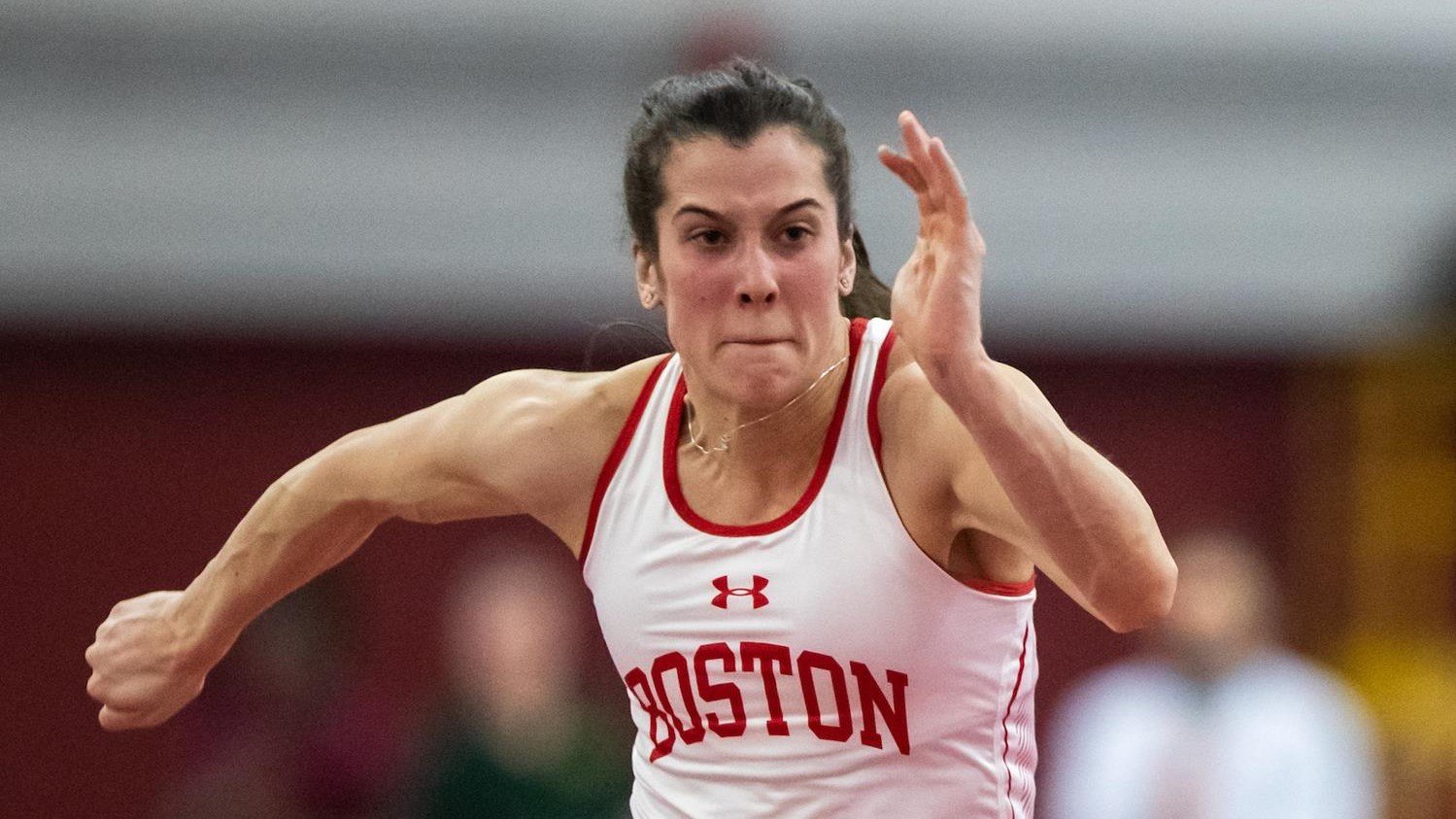
I was a young girl with big dreams, and the opportunity felt impossible to ignore. An incredible education, Division I athletics, and a new challenge all wrapped into one opportunity. Although things ultimately did not work out with Duke, another opportunity came my way through Boston University. As a multisport athlete who had placed ninth nationally in the 400m hurdles after only running the event a handful of times, I was excited by the possibilities ahead. Everything seemed perfect such as a great education, Division I track and field, and an opportunity to challenge myself at the next level.
But the reality of college athletics was far more complicated than I expected. Everything at Boston University was not perfect. In fact, at times, it felt incredibly overwhelming. During my time there, I struggled with mononucleosis, respiratory infections, pneumonia, injuries, emotional stress, and the pressure that often comes with high-level athletics. I constantly tried to push through illness and exhaustion because I believed that was what strong athletes were supposed to do and eventually, my body started to break down.
After developing pneumonia and rushing to urgent care because I was coughing up blood, recovery became difficult physically, mentally, and emotionally. Around the same time, I was also grieving the loss of a loved one, which added another layer of stress and exhaustion to everything I was carrying. At the end of the season, I had a meeting with my coach. I remember him beginning the conversation by saying, “Greer, I don’t like having these conversations with my athletes, but this is something that needs to be said.” Then the conversation shifted toward my body and performance and how becoming smaller would ultimately make me faster.
My heart immediately started racing. I felt anxious and confused and with no direction to seek help.Thoughts flooded my mind. Was I in trouble? Was I not performing well enough? Was I going to lose my scholarship?
Remember that fire I talked about earlier? This was the first moment I felt it begin to dim. Suddenly, I started questioning everything. Should I not be eating the protein bars after practice? Should I not have gone out for pizza with my friends after Saturday morning workouts? Thoughts that had never crossed my mind before slowly became impossible to ignore.
I began associating food with guilt instead of fuel. The same body that had carried me through years of training, competition, strength training, and success suddenly felt like something I needed to change rather than appreciate. Over time, my relationship with food, exercise, and my body became increasingly unhealthy. I struggled with cycles of restricting, throwing up, overeating, skipping meals, and overexercising. I believed that becoming smaller would somehow make me better, stronger, or more successful. Instead, I became exhausted. I experienced chronic fatigue, stress fractures, brain fog, hair loss, constantly feeling cold, loss of periods, irritability, and recurring illnesses. I lost nearly twenty two pounds and reached a point where I no longer recognized myself physically or emotionally.
What made it even harder was that from the outside, people often complimented me. “Wow, Greer, you look amazing.” Little did they know, I was the unhealthiest I had ever been. I was never formally diagnosed with an eating disorder, but I now realize how important it was that I sought support when I did. With the help of supportive friends, family members, coaches, therapists, and nutrition professionals, I slowly began rebuilding a healthier relationship with food, movement, and myself. That experience ultimately became one of the reasons I pursued nutrition.
As athletes, it is important that we properly fuel ourselves so we can perform, recover, grow, and live fully. Food is not something to fear. It is energy, nourishment, connection, and health. It allows us to cross finish lines, score goals, compete, recover, and pursue our fullest potential. There are many people in athletics who genuinely want to help athletes succeed, but it is also important to remember that comments about body image, weight, and performance can deeply impact someone’s mental and physical health. Every athlete’s body is different, and health cannot be determined by appearance alone.
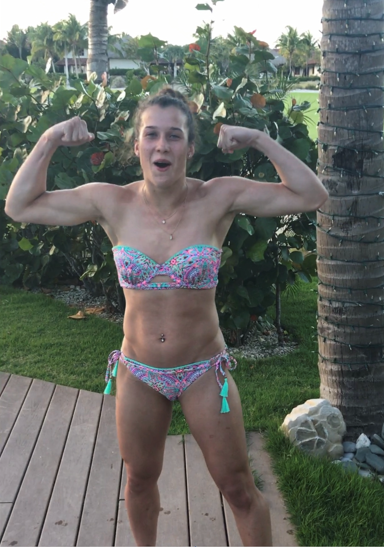
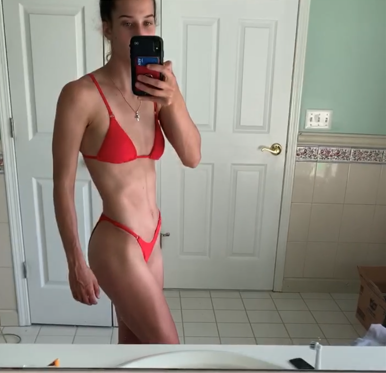
I shared these photos not to scare anyone, but to show something important. The top photo was taken two weeks before I became a New York State Champion in the 400m hurdles. I felt strong, energized, and confident in my body. The second photo was taken during the beginning of my breaking point, when I believed becoming smaller would somehow make me better.
Looking back now, I realize strength was never about becoming less of myself. If you are an athlete struggling with food, body image, burnout, or performance pressure, please know that you are not alone, and it is never too late to ask for help. Reaching out to a sports nutritionist, therapist, coach, or trusted support system can completely change your life. Healing helped me reconnect with the same girl who once ran fearlessly through backyards trying to keep up with her brothers, the girl who loved movement, competition, and challenges simply because they made her feel alive.