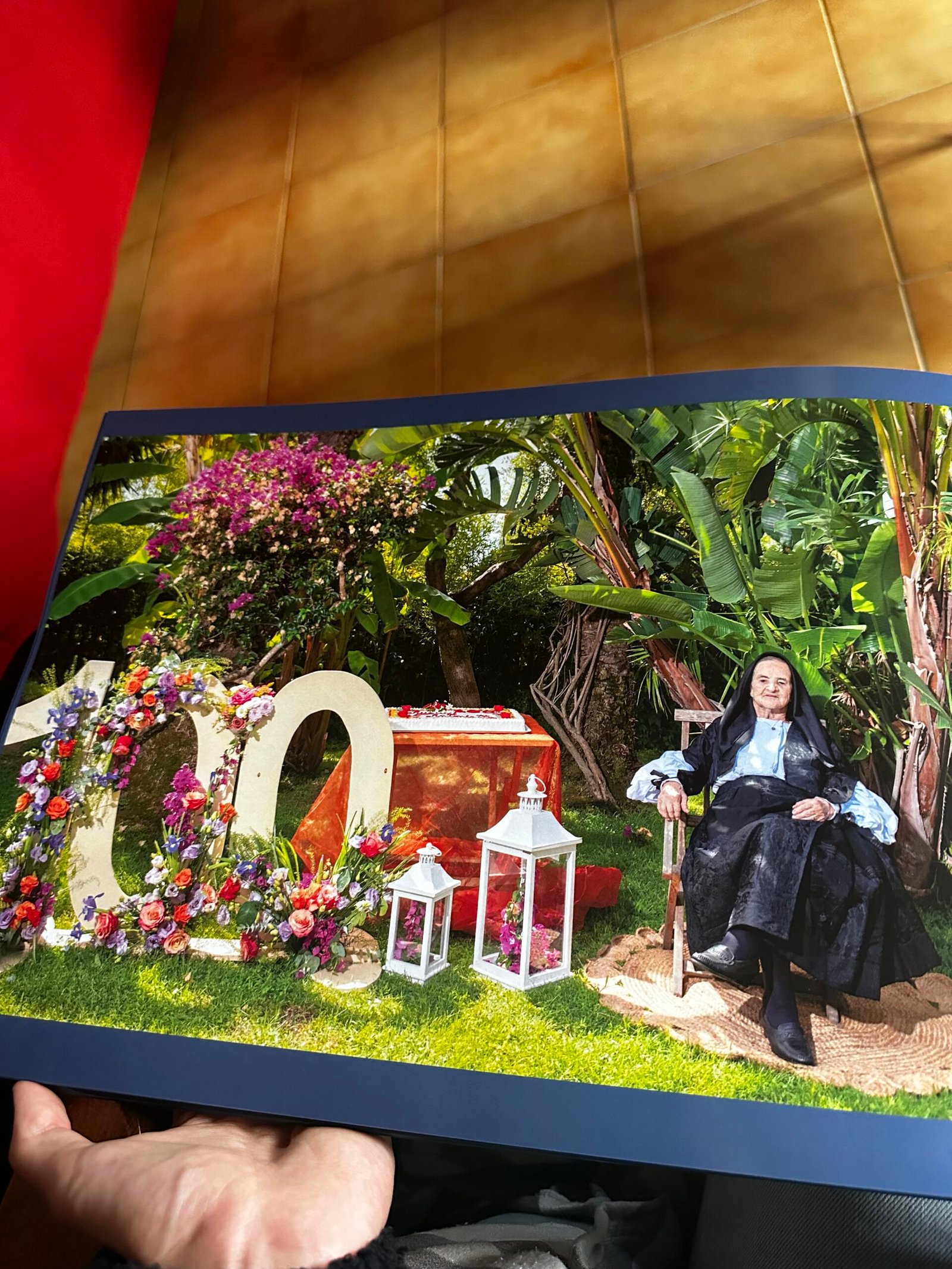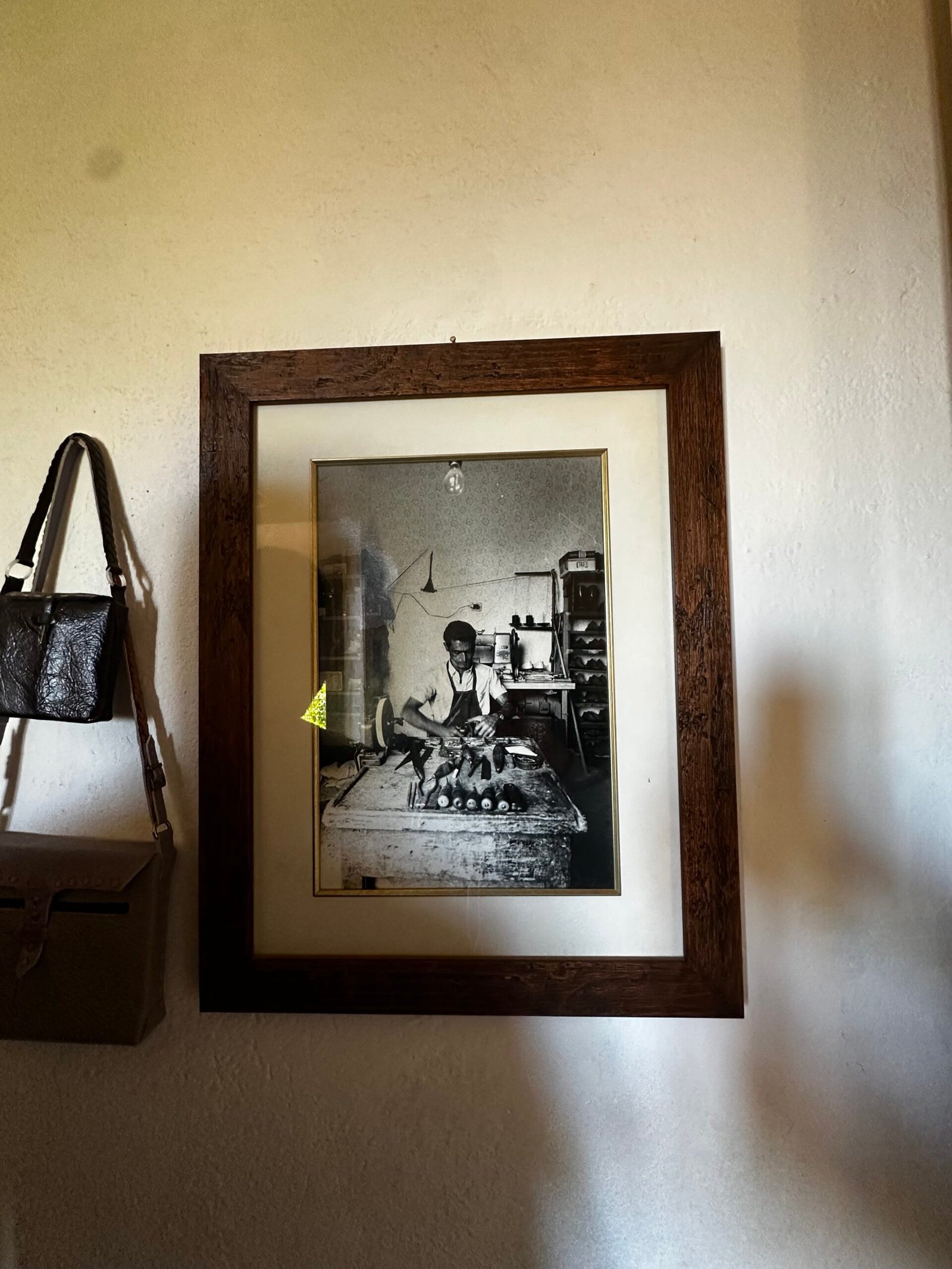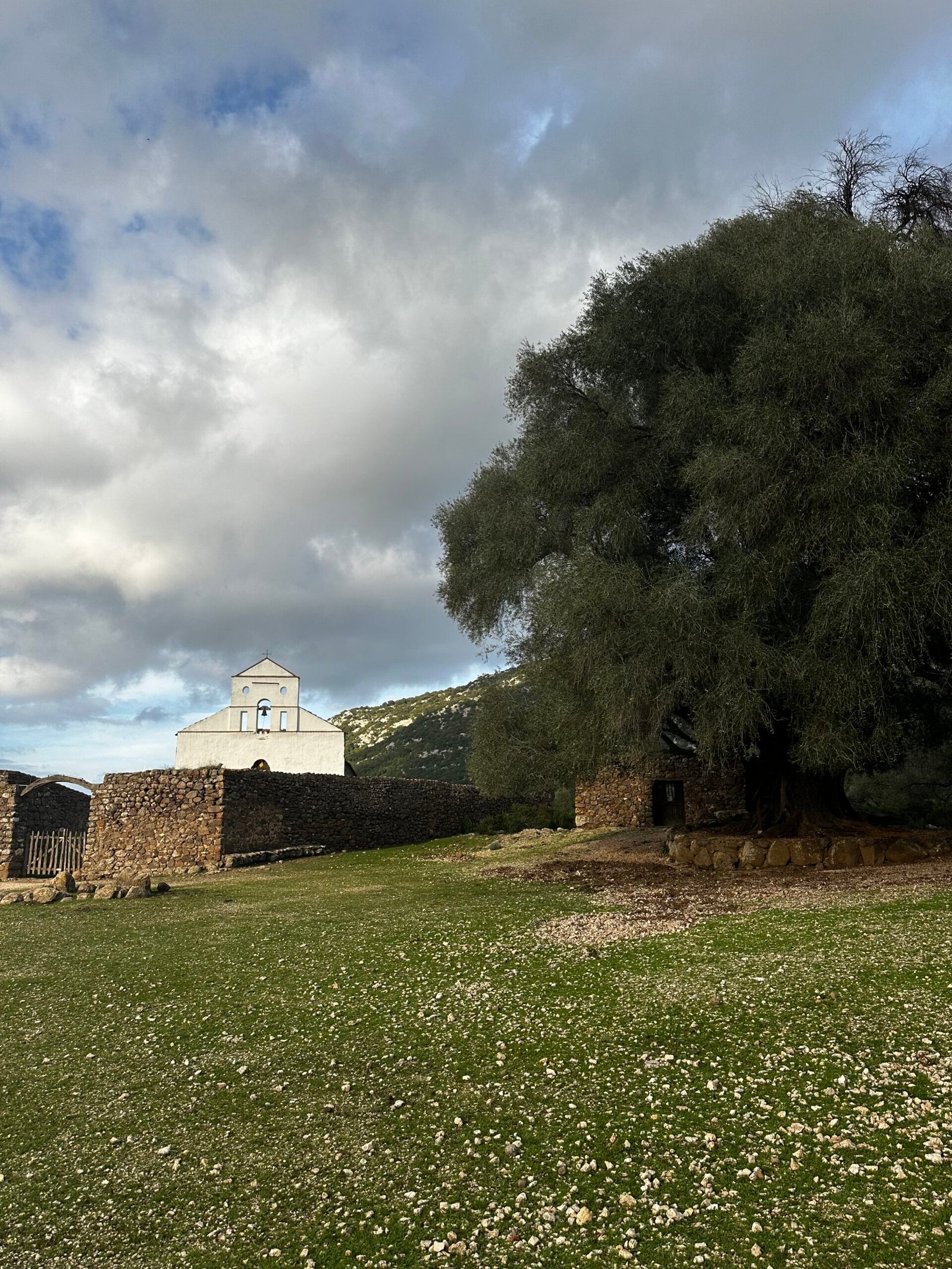
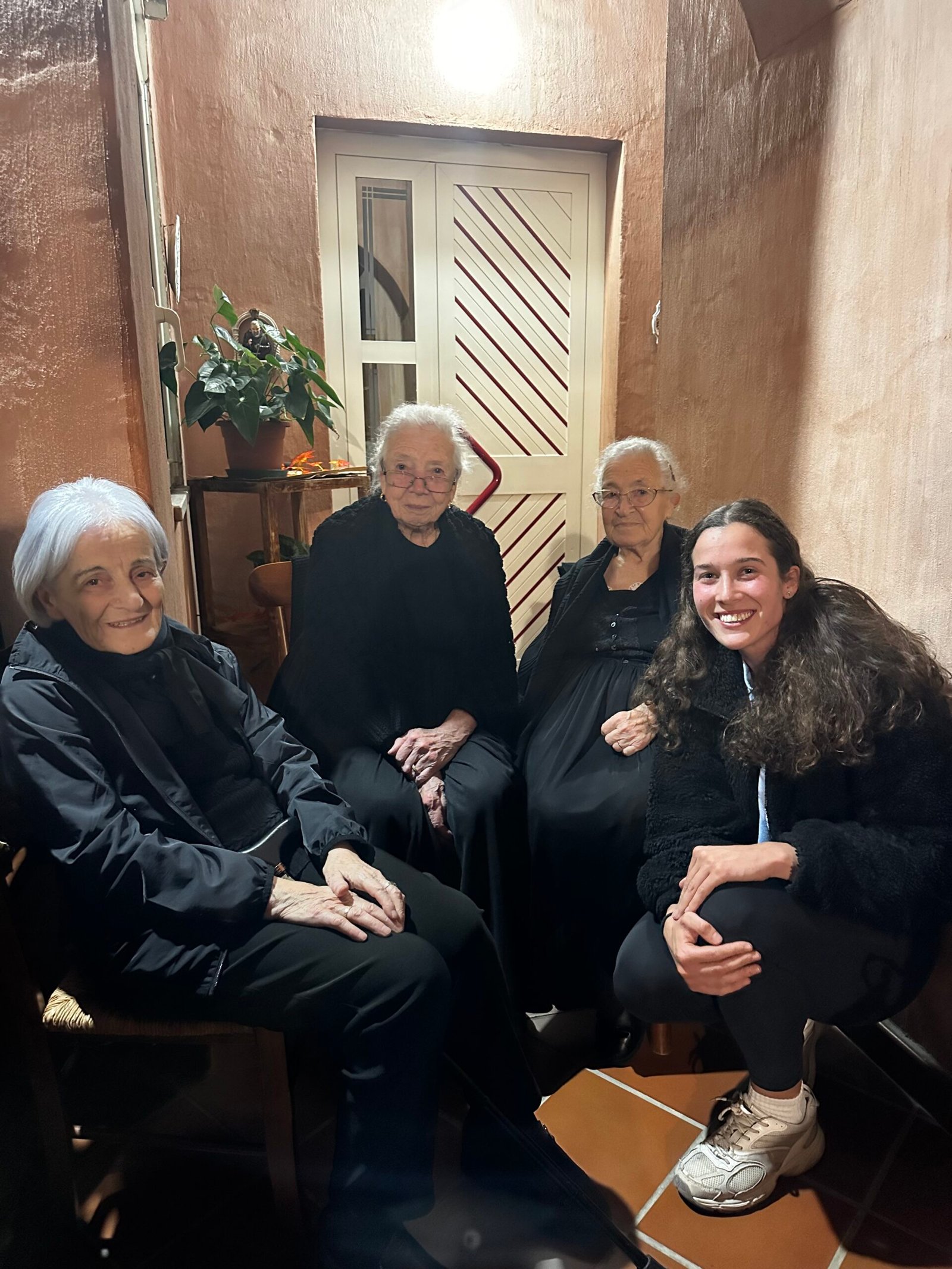
Maria P., ninety-one years old, Veneranda , eighty-two, and Maria F., ninety-four.
Sometimes you find yourself exactly where you are meant to be, not because you planned it, but because you allowed yourself to move slowly enough to arrive.
During my time in the Blue Zone, I went to a village festival in Urzulei, a small village set high in the mountains, with the intention of understanding and experiencing its traditions, though I couldn’t have imagined how life-changing the experience would soon become. There was dancing and singing, and some of the best food I have ever had in my life, shared by the people of the village, who took such pride in offering their homemade dishes and the recipes that had been passed down through their families. As I wandered through the streets and small shops, people shared their work and craftsmanship openly, and I found myself walking slowly, trying to be as present as possible and take everything in. I realized that in places like Urzulei, built high into the peaceful mountains of Sardinia, it felt impossible to rush, because the environment was filled with people who were fully present and simply enjoying their time together. It was in those moments of stillness, as the sun had already gone down, that I became aware I was standing exactly where I was meant to be.
I was inside a small shop with my tour guides, Filippo and Maria, who had taken me through the area earlier that day, and they were asking the women in the shop detailed questions about the traditional clothing laid carefully throughout the space. What fascinated me most was watching how curious they were, even though they had lived in Sardinia their entire lives, and how much they cared to learn more about the traditions they had grown up alongside, as if their love for the place only grew deeper with time and understanding. It was beautiful to witness that level of connection to where they came from.
The clothing in the shop belonged to one of the older women, who had made every garment by hand, and everything was arranged with such care and intention that the room felt alive. Wooden tables were covered with skirts and shirts, surrounded by autumn leaves and warm tones, and there was something romantic about the way the shop reflected the care and patience behind creating the clothing. Stepping into the shop felt like being transported into another world, where time seemed to stand still and tradition was woven into everything around me.
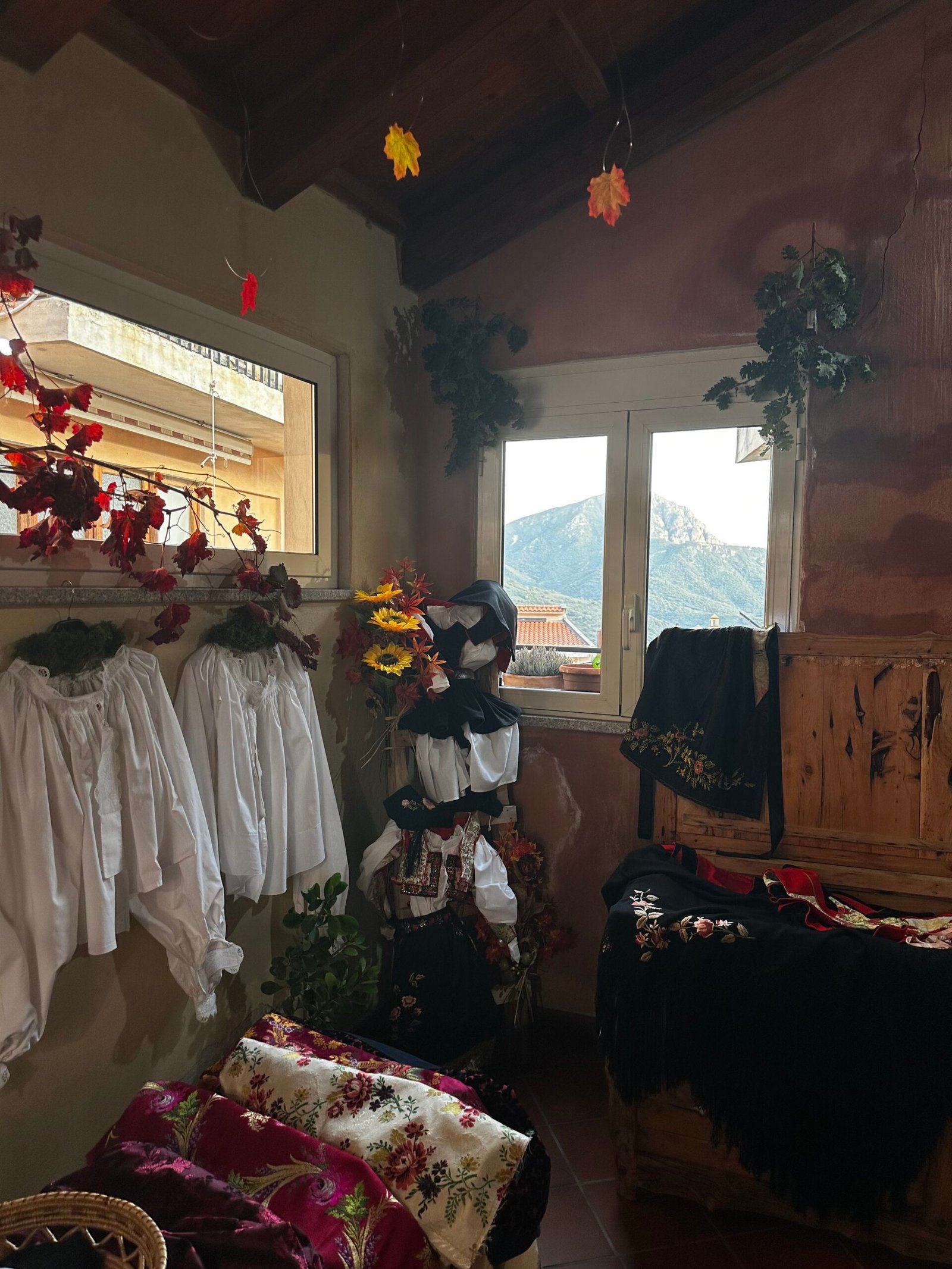
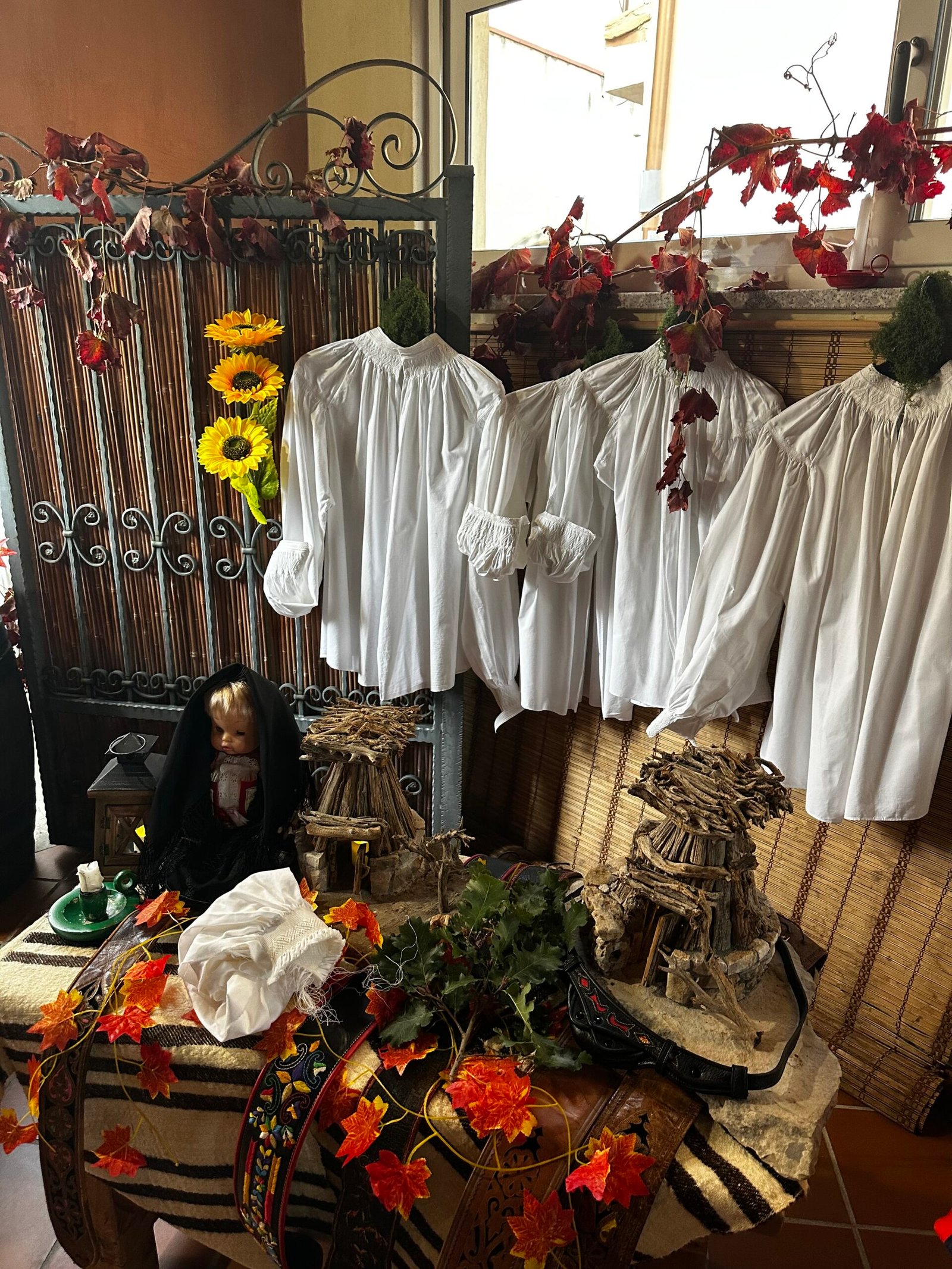
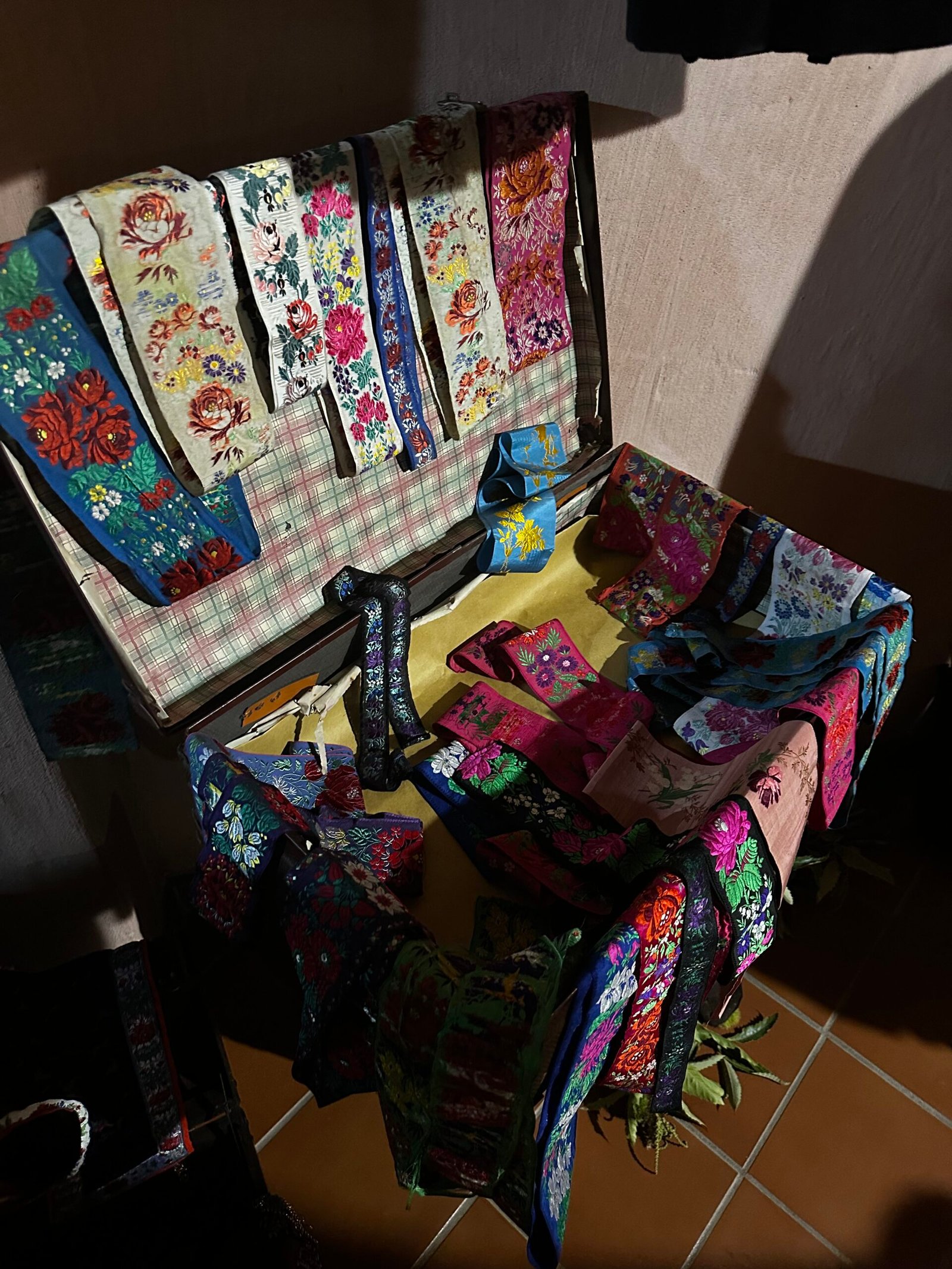
I remember thinking how unbelievable it was that out of all the places I could have been in my life, God had brought me here, into this small shop, with these people, in a small mountainous village. None of this trip had been planned, and the entire experience required patience, quietness, and a willingness to observe rather than control, which left me wondering how, out of all the places in the world, I had been guided to this exact moment.
I softly interrupted Maria and asked if she could help me, telling her about my hope of writing a book and my desire to learn from the elderly women. She agreed and asked if I could speak with one of the women’s mothers, who welcomed the idea with enthusiasm. One of the challenges was language, since many of the older people in Sardinia speak Sardo, a traditional language that is slowly disappearing. I was incredibly fortunate that Maria spoke Sardo and could translate everything for me, and it felt like each piece of the experience was falling into place naturally. We sat crouched together on the floor in a quiet corner of the shop, and the world around us seemed to pause as I pulled out my journal that I had just bought at the festival and began writing as quickly as I could, aware that these are the moments you never plan for, yet somehow must always be ready to receive.
Maria P., Veneranda , and Maria F. had each aged with an extraordinary kind of grace. There was a light in their eyes and a gentleness in their smiles that I felt immediately as I greeted them. They barely knew me, yet I felt as if we were meant to be sitting together in that moment. They sat calmly in their chairs, reunited as friends, dressed in black as Sardinian widows traditionally dress after their husbands have passed. As we sat together in the back of the shop, huddled close and listening, it felt as though time had slowed and everything else around us had fallen away. Everyone in the shop seemed eager to listen to what these women had to say.
They began to share stories from their childhood, and although their lives eventually took different paths, all three of the women had grown up as farmers, and it was the work on the land they remembered most. As Maria translated, she explained that they kept returning to those memories, speaking openly about how poor they were, yet how much they loved life on the farm, as if those days had left a lasting mark on them. Veneranda missed working on the farm, but had to stop because she ended up working for a news agency at the age of twenty years old. She said her father loved her and her three sisters because they worked the farm together like three brothers. Maria P. said that she would plow and do whatever her family told her to do on the farm.
Maria F. was the one who had made all the clothing in her shop and Filippo explained that it could take up to eight months to create a single white shirt. Recently, she had begun losing feeling in her fingers, and she told me it was driving her crazy. She could no longer sew, and she missed her work. She reminisced about her childhood and shared that she had seven siblings, that they all worked on the farm, and that Sunday was their only day off. Sundays were the only days they could wash and rest, and they would go into the mountains to help their father. There were ten people living in their home with only two bedrooms, and they didn’t eat much. She told me that now she feels sad because she can no longer do what she loves, especially working on the farm. One thing all three women repeated was that although they had grown up very poor, they never felt poor, because they had family and one another, and that was what mattered most.
One of my favorite questions I asked the women was what their favorite day of life had been. Independently, all three of them said the same thing that their wedding day, standing at the altar with their husbands, was the best day of their lives. I found that incredibly beautiful because, despite how different their lives had been, this was what they all shared in common, and it spoke to how much the sanctity of marriage mattered to them. Their most cherished memory was committing their lives to another person, alongside God, and choosing that devotion wholeheartedly. Marriage wasn’t something they spoke about lightly, but as the foundation of a life well lived. I think this is what I loved most about Sardinia, because traditions are still cherished and respected, not replaced or labeled as old or irrelevant. There was a deep respect for commitment and for choosing one person and building a life together, even through hardship and change. They had lived full lives, and still, the day they stood at the altar in their mid-twenties remained the most meaningful for each of them.
It made me reflect on how rare that can feel elsewhere, especially in the United States, where people are often encouraged to move on quickly or search for something new, believing fulfillment lives in endless options or in the fleeting attention of social media. Sitting with these women reminded me that there is something sacred about dedication and about staying and choosing love again and again, even when times get difficult. They shared how they were poor and ate mostly polenta and pasta, but they never felt poor because they had family, purpose, and one another. They got through the hard times together, and they spoke about how beautiful that was.
They shared with me the secrets to a long and happy marriage as they spoke about respect, endurance, and unity, about caring for one another through both good and bad, and listening to them, I finally understood why the room felt so full of romance. These were women who had loved wholeheartedly, worked hard, remained loyal, and overcome every obstacle life had placed in front of them. As the world changes, money grows, and values shift, I think stories like this are important to share. Especially in a time of overconsumption, infidelity, and unhappiness it feels important to remember the beauty that can come from struggle and suffering, and even more so from staying together and valuing loyalty. The impression they left on me is something I know I will carry with me, and the imprint they left on my soul will stay with me forever.
At twenty-six years old, my idea of a perfect Saturday night was sitting in a small mountain village on an island far from home, listening to the wisdom of women who had lived full lives rooted in love. It remains one of the best nights of my life. I will carry this experience with me forever, and I am grateful that I went to Sardinia not to consume or rush, but to listen, to learn, and to be reminded of what truly matters, especially in a world that feels increasingly fast.